
Flip Bros
More Games

Flip Bros — You Are the Projectile
GameTornado shipped this in late 2023 as a joke with teeth. One hold winds a spin. One release throws your whole body. The other character is a pin, the floor is optional, and later rooms are mostly spikes wearing a smile. If you already bounce around the bar park on the homepage, this is the same honesty aimed at a person instead of a rung.
Look at the spin
The hold
The first room writes the whole language on a key: hold Space, watch the body, lift when you mean it. Later rooms keep that sentence and remove the floor.
The throw
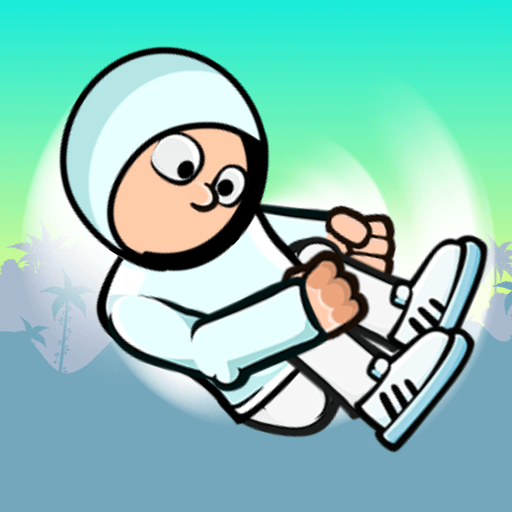
A hoodie ragdoll and a pin. One hundred and fifty rooms later it is still those two shapes plus whatever spikes the designer wedged between them.
The launch loop
- Wind, then throw: Hold left mouse or Space. The ragdoll coils and the facing arrow crawls around. Lift to fire along that arrow. On a phone the same beat is tap-and-hold, then lift. There is no second button for aim, jump, or attack — charge time is power and heading at once.
- You hit as a body: The win condition is contact. Elbows, knees, and helmet all count. A clean slam knocks the other guy; a late slam plants you in a pit. Treat the silhouette as a thrown brick, not a character you steer after takeoff.
- Under-charge on purpose: A full hold looks heroic and overshoots. Mid and late rooms want a short coil and a hop that barely clears the gap. If you keep kissing spikes on the far wall, you are holding too long, not too little.
- Borrow a wall: From the second band onward a straight line often crosses a hole. Clip a wall so the next launch starts from a new heading. A light touch is a reset; a hard slam is a restart.
- Trust the arrow, ignore the vibe: The arrow is the only vector the game will honor. If it is a sliver off the target, wait a quarter turn. Releasing because “it felt close” is how the last thirty rooms eat attempts.
- Five bands of thirty: Rooms 1–30 teach the spin on standing pins. 31–80 add pits and a first wall. 81–120 are spike corridors that demand short hops. 121–150 want a one-frame release. Miss the window and you start the room again — there is no checkpoint inside a stage.
Why this one exists
Stage bands and hazards
How the rooms get meaner
- Opening band: standing targets, wide floors, time to watch a full rotation.
- Second band: pits appear; a wall bounce is no longer optional on a few rooms.
- Third band: corridors so tight a full hold is a death. Short coils only.
- Last band: the arrow must sit on the pin. A frame late is a restart, not a funny tumble.
What the toy refuses to give you
- No dash, no ground pound, no separate aim stick. If a guide lists those, it is describing a different build.
- No canned attack clip. Contact is geometry: your mesh versus theirs versus the spike strip.
- No mid-air steer after release. The throw is the whole decision.
Cleaner launches
- Wait the extra quarter turn: Almost every “unlucky” spike is an early release. Count the arrow past the pin, then lift. The extra beat feels late and is usually on time.
- Start every room with a shy hold: Default short. Add power only after a hop dies in the pit. Most mid-game gaps are smaller than they look from the spawn ledge.
- Plan the bounce before you leave the floor: If the pin sits behind a pit, the first throw is a setup into a wall, not a hero slam. Picture the second heading while you are still winding the first.
- One hold per attempt: Panic taps blur the spin. Watch one rotation, pick one lift. Resetting the room is cheaper than mashing through a bad heading.
What people bounce off
Paraphrased chatter, not quotes
Cute until room forty. After that I was counting quarter turns like a fighting-game input. The joke is the skill ceiling.
The late band is rude on purpose. Short coils and wall setups are the whole craft once the tutorial smile goes away.
Came off the homepage bars. Same rule: the engine will not save a sloppy release. I like that it does not grow extra buttons to hide that.